MEMBERS ONLY: “Speed Dating” with TSA’s Acquisition Team

Join GTSC for one of our most highly regarded events:  speed dating with the TSA acquisition team.  GTSC members will have an opportunity to ask questions of a number of heads of contracting from across TSA in 10 minute sessions, then move on to learn even more!  Those of you who have been with us from the beginning may remember our similar session with DHS CPO Nick Nayak and his team.Specific participants will be announced as they are identified.  Register here.


Part II: Implementing Agile at USCIS

PART II

In part II of our interview with Josh Seckel, Sara Kindsfater-Yerkes, Chair of the GTSC Business Development Exchange, was able to sit down with USCIS’ Chief of the Applied Technology Division (ATD) to discuss the agile transformation at U.S. Citizenship & Immigration Services at the U.S. Department of Homeland Security. Among ATD’s chief responsibilities are driving the adoption of agile across the USCIS enterprise, brought about in part by providing agile coaching services – experts across the technical, process and organizational change domains who help clients shift their culture and mindset to lean/agile thinking. This is a sea change in Federal IT – moving away from the lengthy, and staged waterfall methods to continuous activities for developing software. By doing them continuously quality improves because testing starts day one, visibility improves through collaboration and increased visibility, and risk is reduced through continuous feedback and prioritization of work.  

GTSC: You’ve been through some of the best agile coaching training out there – for those who aren’t coaches what does “being a good mirror” mean?

Josh: Yes. They are able to point out to the team what is engrained that they are doing and can’t see for themselves, and get them to question, “is there a better way” versus accepting “we’ve always done it this way”. That takes a special relationship – one built on trust, honesty but without being a snitch, not judging but helping and not being oversight.

GTSC: So how are coaches typically different than scrum masters?

Josh: Again, really good scrum masters can be agile coaches, as long as they’ve had experience helping teams grow and get better. It’s a really small number of people that can do that though – be scrum masters AND agile coaches. Biggest differences between scrum masters and agile coaches is their area of engagement – scrum masters focus on team, coaches focus on project or program, and multiple teams of developers, scrum masters and stakeholders. At USCIS we have agile coaches that focus on divisions and entire portfolios of systems.

GTSC: This is somewhat self-serving given my background but how is agile driving culture change in the government?

Josh: Agile is helping the government breakdown silos, slowly. People are talking – maybe not collaborating to the fullest extent but we’re realizing why it’s important to talk to other parts of the organization. Within USCIS the IT people are engaging the business side more than they used to. Speed is also a big driver of change – there’s a new expectation for delivery on the order of months not years. The pace of change in government is increasing – I know it’s been that way in industry – but in government we are really pushing to think about what comes next. Agile is also changing the way we think about quality – we’ve got to deliver quicker, with less resources and keep focused on quality while maintaining that pace. Next, we’ve got to focus on understanding MVP (minimum viable product) on the business side – that’s coming.

GTSC: It’s a consistent pain point – how do you procure agile services?  

Josh: We’ve got to focus on agile acquisition, not acquisition for agile. What I mean is we need look at what we need to change in the acquisition process. We’ve also got to keep contractual requirements in contracts and leave business requirements out of them. Come to Agile 2016 to hear me talk about this – I have a lot to say on this topic!

GTSC:  As you know, GTSC’s “tag line” is, It’s All About Mission.  How do you think agile impacts the mission of USCIS? 

Josh:  Agile impacts the mission of USCIS by providing more immediate responses to changes in direction, both large and small.  When the executive order for Deferred Action for Parents of Americans and Lawful Permanent Residents (DAPA) came down, we were able to start working on the changes much faster than history would indicate.  And when the court stayed the order, we were able to switch back very rapidly as well.  Or on the small level, we are fixing and changing items on a rapid basis because of user feedback. This enables the officers to be much more responsive to the applicants rather than having to deal with a long wait and many work arounds.

GTSC: So last question, how do we work together (government and industry) to continue to bring things like agile, to the government to improve government?

Josh: Neither can do it alone – agile, devops, etc. – it has to be a partnership. We’re going to put out RFPs for agile delivery, and we’re going to expect that those bidding can do things like test driven development (TDD). If companies bidding don’t have the skills they won’t win. It’s a different world. Companies need to keep the skills of their teams up to date and growing; we’ve all got to focus on the work and the mission.

JOIN US to hear Josh in person discussing best practices in agile at USCIS, March 10, 2016.  REGISTER here.

Sara Kindsfater Yerkes


Sara Kindsfater-Yerkes
, leader of GTSC’s DHS Business Development Exchange and member since 2012, is an Organizational Change Strategist with expertise in guiding large-scale transformations, Sara is passionate about helping individuals and teams to become high performing and creating cultures in which all can thrive. She currently supports Josh and USCIS in the cultural adoption of lean/agile practices.

Part I: Implementing Agile at USCIS with Josh Seckel, Chief, ATD, USCIS

We’ve also got to create a culture of partnership. We recognize companies are in business to make money, but we’ve got to create alignment towards a bigger purpose – like changing the way federal IT works.

Sara Kindsfater-Yerkes, Chair of the GTSC Business Development Exchange, was able to sit down with Josh Seckel, Chief of the Applied Technology Division (ATD) at USCIS. In this two-part interview, they discuss the agile transformation at U.S. Citizenship & Immigration Services at the U.S. Department of Homeland Security. Among ATD’s chief responsibilities are driving the adoption of agile across the USCIS enterprise, brought about in part by providing agile coaching services – experts across the technical, process and organizational change domains who help clients shift their culture and mindset to lean/agile thinking. This is a sea change in Federal IT – moving away from the lengthy, and staged waterfall methods to continuous activities for developing software. By doing them continuously quality improves because testing starts day one, visibility improves through collaboration and increased visibility, and risk is reduced through continuous feedback and prioritization of work.  

GTSC: So Josh, we’ve known each other for a while now, but I’d like to give people insight into your background. Where should we start?

Josh: Where to start? So the dinosaurs roamed. No, just kidding! The short version is that after getting my Computer Science degree I went to work for IBM and got to participate in all aspects of the software development process – but come 2001 I was still programming in Cobol. I decided to go back to school and get my MBA which obviously taught be a great deal about the business-side of organizations. I get accounting, P&L, all that good stuff. After that, I came to DC and worked for a few federal contractors, which gave me the experience to support programs with the United States Marine Corps, the Joint Strike Fighter, the Domestic Nuclear Detection Office where I was part of a team introducing agile concepts and then to the Homeland Security Information Network coaching on agile. Then I came to USCIS, as a government employee. I’ve been around DHS since it’s inception and working with agile concepts like rapid application development before agile became mainstream.

GTSC: What has your role been at USCIS?

Josh: I came to USCIS to help CIO Mark Schwartz advise the organization on the adoption of agile and to be a federal coaching leading contractor coaches.

GTSC: What made the job as a “Govie” appealing to you?

Josh: The ability to say “yes” enticed me. I’d worked as a contractor and was told “great idea, but no” and wanted to listen to great ideas from both government and industry and be able to say “yes – let’s try that.” I also wanted the opportunity to really execute on this idea of agile adoption and improving federal IT more fully.

GTSC: You’ve been very mission focused from that perspective. Very cool. Your response made me think, and this a bit tangential, about the fed/contractor relationship. How do we change and improve that dynamic?

Josh: Good question. The government needs to do its part – we need to improve federal employee education and what I mean by that is putting someone in charge of overseeing an agile program with skills and experience in agile. We hire contractors because they have specific expertise that we don’t, but then we get unfriendly because they know things we don’t. The flipside of that is the perceptions that contractors think the government employees don’t know anything and that too causes tension.

GTSC: It’s definitely a vicious cycle that we’ve got to collectively break. There’s nothing more gratifying as a consultant then to work with a customer who needs your expertise and allows you to work with them to solve real problems.

Josh: Yes, so we’ve also got to create a culture of partnership. We recognize companies are in business to make money, but we’ve got to create alignment towards a bigger purpose – like changing the way federal IT works.

GTSC: You’ve been spearheading agile coaching internally at USCIS, what’s the value agile coaches provide? How are they different from Scrum Masters?

Josh: Well, I would start by saying that they don’t necessarily have to be different then scrum masters; really good, experienced scrum masters can be coaches. Agile coaches provide knowledge on how to do this new thing through their experiences not a 2-day course. Good coaches offer a broader perspective and are a good mirror – they are a reflection of the team back to itself, an objective 3rd party reflection. And they not only coach the development team, they coach management too.

STAY TUNED to next week when Sara and Josh discuss being a good “mirror,” coaches versus scrum masters, and how agile is driving culture change in the government.

Sara Kindsfater YerkesSara Kindsfater-Yerkes, leader of GTSC’s DHS Business Development Exchange and member since 2012, is an Organizational Change Strategist with expertise in guiding large-scale transformations, Sara is passionate about helping individuals and teams to become high performing and creating cultures in which all can thrive. She currently supports Josh and USCIS in the cultural adoption of lean/agile practices.


GTSC Insight: Agile at USCIS March 10

Join GTSC for a discussion of agile efforts and accomplishments at USCIS.   Mr. Josh Seckel  has been working at USCIS to transform to a learning organization that can deliver business value quickly, security, and with high quality through agile processes.  He is working to lead the DHS Agile IPT to propagate and share information across DHS on effective implementations for agile adoption.  Read our Blog interview with Josh (Part I, Feb. 8 and Part II, Feb.15)

Register for the event here.

Smashing the Box: Innovation Submissions Due March 22

smashing the box high resSince GTSC’s inception, our members have been concerned about how our public sector partners find and reach new ideas and innovations.  With technology, threats, and ideas changing at the speed of light, those concerned about achieving the homeland and national security mission are concerned too.  So, GTSC members launched “Smashing the Box” events, a project grown out of our efforts to help the government more thoroughly perform market research and reach innovative new players.  These events seek to provide our government partners with a method and mechanism to forage for the latest cutting edge ideas to help us protect the nation.

ODNI seal


Smashing the Box Event:  ODNI & the IC Community

March 2016
Tyson’s Corner, Virginia

GTSC’s March 2016 Smashing the Box Event will focus on technologies, ideas, and products to assist the Office of the Director of National intelligence (ODNI) and the Intelligence Community (IC).  This event will feature in-person presentations from companies selected from the applicants, and ALL applicants will be included in an abstract compiled and distributed to our partner agencies.  Applicants are asked to submit a nonproprietary, unclassified, proposal that tells us why we should pick their innovation and how it assists with the mission sets below.  The event will be held in the Tysons Corner Virginia Area.

UPCOMING PREP
March 3, 2015:  ODNI INDUSTRY DAY  Briefing of the IC/ODNI Science & Technology Strategic Plan by Dr. David Honey, Director, for Science & Technology and Assistant Deputy Director for National Intelligence for Science & Technology for the Office of the Director of National Intelligence will brief us on the FY 2016-2020 S&T Strategic Plan for the IC Community and the requirements being built around the plan.  This briefing is an opportunity to hear about the challenges and strategies that the IC Community will employ to “manage risk and ensure intelligence advantage” over our adversaries.  Read the Strategic Plan here.  This briefing will prepare companies interested in submitting their innovative technologies for GTSC’s Smashing the Box Innovation Day in March.

TOPICS:

GTSC Smashing the Box Event with the Intelligence Community & the Office of the Director of National Intelligence’s Office of Science & Technology 

Vulnerabilities and malicious functionality in software and firmware
>>Autonomous discovery of structure in software and firmware
>>Inspection techniques for software & firmware, for identification of unusual functionality
>>Automated vulnerability identification

Novel sensing technologies
>>For various types of sensors: imaging, signals, acoustics, etc.
>>Proximity: close up vs. long range standoff
>>Digital, online, sensors and exploitation
>>Discovery of adversary activities; information gained from integrated sensor systems

Enhanced processing and management of data from disparate sources
>>Data recognition, formatting, ingest and storage from disparate sources
>>Free form vs. structured data management techniques
>>Searching, comparing, extracting information from a variety of data formats

Maximizing analytic insight from fused datasets
>>Information gained from various visualization techniques and strategies
>>Information gained from various analytics techniques
>>Techniques to capitalize on and re-use information gained; machine learning and automation
>>Hybrid approaches, multiple strategies, to gaining insight from data

Technologies to support detection of global proliferation activities
>>Global CBN threats, identification, anticipation, warnings and signatures
>>Proliferation trends, techniques, forecasting, tracking
>>Techniques for anticipating, discerning, and characterizing global proliferation

Bonus Area – Game changing technologies
>>Do you have a project developing the next generation of game changing technology, such as “stealth” or “GPS” were in their early stages?

Vulnerabilities and opportunities in the Internet of Things
>>Autonomous discovery of structure in software and firmware
>>Inspection techniques for software & firmware, for identification of unusual functionality
>>Automated vulnerability identification

Secure Mobility
>>For various types of devices: Tablets, smart phones, etc.
>>Proximity: close up vs. long range standoff

Social Media Trends
>>New Applications = new sources and new vulnerabilities
>>Cover and asset concerns
>>Security clearance and CI implications

Future of Personally Identifiable Information
>>Can PII be considered protected and private anymore?
>>Validating Personal Information following Major Data Breaches

TIMELINE

Abstracts will be accepted until March 22, 2016.
Presenters will be notified by April 1, 2016.

LEARN MORE HERE.

ODNI Industry Day March 3

Join GTSC as we prepare for our Smashing the Box Innovation Day on behalf of the Intelligence Community and the Office of the Director of National Intelligence.  For more information on the Smashing the Box Series, please click here.

Dr. David HoneyDr. David Honey, Director for Science & Technology and Assistant Deputy Director for National Intelligence for Science & Technology for the Office of the Director of National Intelligence will brief us on the FY 2016-2020 S&T Strategic Plan for the IC Community.  This briefing is an opportunity to hear about the challenges and strategies that the IC Community will employ to “manage risk and ensure intelligence advantage” over our adversaries.  Read the Strategic Plan here.  This briefing will prepare companies interested in submitting their innovative technologies tfor GTSC’s Smashing the Box Innovation Day in February.  Learn more about this event here.

Who should attend?

Technology Companies and others interested in learning about S&T’s direction, those interested in submitting a proposal to GTSC’s Smashing the Box Innovation Day with S&T in early 2016, and contractors interested in understanding the S&T mission for the IC community.

REGISTER HERE

More About Dr. Honey:

Dr. David Honey serves as the Director for Science & Technology and Assistant Deputy Director for National Intelligence for Science & Technology for the Office of the Director of National Intelligence. Dr. David A. Honey joined the DoD’s Office of the Director, Defense Research and Engineering as the Director for Research on 31 August 2009. Dr. Honey was responsible for policy and oversight of DoD Science and Technology programs from Basic Research through Advanced Technology Development. He was also responsible for oversight of DoD laboratories, ensuring the long-term strategic direction of the Department’s S&T programs, and for developing those technologies needed for continued technological superiority of US forces. Before assuming this position Dr. Honey was the General Manager and Senior Vice President of the Defense Sector for Information Systems Laboratories (ISL), a small business pursuing science and engineering innovations in the fields of advanced sensors, communications, UAVs, adaptive signal processing, and undersea warfare technology. Dr. Honey also served on the Air Force Scientific Advisory Board. Dr. Honey was the Director of the Defense Advance Research Projects Agency (DARPA) Strategic Technology Office (STO), Director of the Advanced Technology Office (ATO), and Deputy Director and Program Manager of the Microsystems Technology Office (MTO). While at DARPA he led efforts in optoelectronics, networks, communications, information assurance, network-centric-warfare applications, information assurance, sensor systems, space and near-space sensors and structures, maritime technology, underground facility detection and characterization, alternative energy, and chemical-biological defense.


GTSC Awarded “Excellence in Partnership” by U.S. Department of Treasury

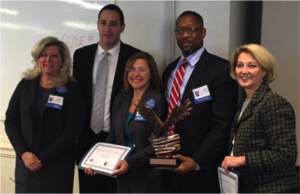
The U.S. Department of Treasury, Office of Small Disadvantaged Business Utilization, presented the Government Technology & Services Coalition (GTSC) with the Excellence in Partnership award for “Moving Treasury’s Small Business Program Forward” through its work to develop a robust program for small businesses interested in working with the Department.
treasury award photo

“GTSC leadership worked with us to develop and execute an extensive program to help small companies understand the Department of the Treasury, our needs, and where small businesses could help our mission in both every day execution and in how they invest in their business. Their leadership and members participated with us in a number of projects to educate our contracting workforce and to improve the market research around how Treasury finds new vendors. We are extremely pleased to present GTSC with this award.”

Treasury assists, counsels, and advises small businesses of all types (small businesses, small disadvantaged business, women-owned small businesses, economically disadvantaged women-owned small businesses, veteran owned small businesses, service disabled veteran owned small businesses, and small businesses located in historically underutilized business zones) on procedures for contracting with Treasury.

In 2015, the Department greatly expanded its small business program hosting its first Small Business Roundtable with leadership from Treasury and small business organizations, hosted its first Small Business Industry Day, and worked with the U.S. General Services Administration to develop a video-training tool for Contracting Officers (COs) used government-wide.

“A debriefing is one of the most impactful communications that takes place during the acquisition process, because of the of the various implications it has to both parties. Delivering a debriefing is a skill, and like most things worth doing, it is best executed with practice. My colleagues from GTSC and I were honored to be a part of the Department of Treasury’s mock debriefing training. Knowing our efforts will be used to train hundreds of procurement professionals is very rewarding,” said Carolyn Muir, Executive Vice President of SE Solutions and GTSC’s Chair of Acquisition & Procurement Initiatives. Companies that participated included SE Solutions, Keep It Simple Technology Solutions, McMenamin (MCG) Consulting, LeapFrog Solutions, and Rigil.

“We are extremely grateful and honored by this award,” said Kristina Tanasichuk, Founder & CEO of the Coalition. “In response to Treasury’s commitment to small business, GTSC added the Department as one of our partner agencies this year. They recognized the value of small business and have made a tremendous contribution to the small business community by engaging deeply, understanding the strengths of what these innovators have to offer, and educating their workforce on the benefits of this community. We are proud to work with them to find the innovation, creativity, and professionalism needed to execute their mission while supporting the small business community.”

See the release here.

GTSC Announces 2015 Award Winners

The Government Technology & Services Coalition (GTSC), the premier non-profit organization for small and mid-sized companies in homeland and national security, today announced the numerous public and private sector leaders and innovators that will receive awards at the organization’s 2015 Annual Holiday Awards.

“Despite the many challenges, there are so many people in and outside our government working to secure our nation — we are humbled by their service. While we can only recognize a handful of the deserving each year, we want to encourage and appreciate ALL of those who dedicate their lives, careers, and companies to the mission of a safe prepared America” said Kristina Tanasichuk, founder and CEO of the Coalition. “This is our small way of saying thank you.”

Since 2012, the Coalition has developed a series of awards to recognize some of the unsung heroes working to improve how the public and private sector collaborate, assuring that innovation and efficiencies can find their way into the government and encouraging an environment of mentorship in support of the nation’s critical homeland and national security missions.

Federal Small Business Champion of the Year
Jose L. Arrieta
Director, Office of Small & Disadvantaged Business Utilization
Department of the Treasury

Most Valuable Player for Big Data
Scott Shoup
Chief Data Officer
Federal Emergency Management Agency

Most Valuable Player for Cyber Security
Suzanne Spaulding
Under Secretary for the National Protection & Programs Directorate
U.S. Department of Homeland Security

Small Business Member of the Year 2015
SE Solutions

Mid-Tier Member of the Year 2015
MorganFranklin Consulting

Mentor of the Year 2015
Motorola Solutions

Market Maven 2015
David Olive
Principal, Catalyst Group Partners
Contributor, Security Debrief

Strategic Partner of the Year
InfraGard National Capital Region Members Alliance

Strategic Advisor of the Year
Elaine Duke
Elaine Duke & Associates

“SE Solutions has engaged deeply with GTSC and leads the organization’s Acquisition and Procurement Action Group. We believe that this work fosters a more open and efficient contracting environment, and we are proud to be a part of improving the quality of this critical area due to its significant impact on mission outcomes,” said John Rothenberger, Founder and CEO of SE Solutions. “GTSC provides us a platform to contribute to this important work, and this aligns with our mission to improve the nation’s homeland security.” The Small Business of the Year award is presented to a company that exemplifies exceptional quality, leadership, and ethics in the Federal market, and is a contributing advocate on behalf of our community.

“Since joining GTSC, MorganFranklin has become more and more engaged because we see progress. We see attention being paid to critical issues like challenges for the middle market, the procurement and acquisition environment, and communication between industry and our government partners,” said Frank Landefeld, Managing Director & Public Sector Market Leader at MorganFranklin Consulting. “These are core areas for all contractors, but they impact those of us concerned with mission the most.” Mid-tier Member of the Year is presented to the firm that has contributed positively to GTSC and to the opportunities, ideas, and understanding of mid-tier companies in the Federal market.

“Motorola Solutions joined GTSC because of the organization’s laser focus on moving things forward,” said Curt Steiner, vice president and director of sales for Motorola Solutions’ U.S. Federal Government Markets. “We engaged with GTSC because we wanted to see some progress in the interoperability mission and from that we reignited an engaged conversation around some of the challenges left to make our first responder community interoperable. Now we can roll up our sleeves and work with our federal partners to drive toward the finish line.” The Mentor of the Year award is presented to the company that has worked to increase GTSC members’ understanding of the homeland and national security market, increased business opportunities for small companies through formal and informal mentoring and engages to promote an innovative, robust, fair market for all.

“GTSC just ‘gets’ it. After years in the federal government, I found the leadership of GTSC to understand the challenges but more importantly, willing to do something about them. They have focused on where help is needed and created avenues, products, and services to fill those needs. I watched as they grew and found that their direction was critical to the success of the homeland market,” said Elaine Duke, CEO of Elaine Duke and Associates and former Under Secretary for Management at DHS. “They are tracking with what the market needs.” The Strategic Advisor of the Year is presented to an individual who works on behalf of GTSC to increase the organization’s capacity, membership and opportunities to bring the innovation, creativity and solutions of small and mid-sized companies to the homeland and national security mission.

“The mission of the FBI’s InfraGard program, particularly here in the National Capital Region, is to encourage sharing of information between private and public sectors to ensure our critical infrastructure is secure,” said Kara Sidener, InfraGardNCR liaison for the FBI. “Our partnership with GTSC is an example of the positive relationships built through the program and the tremendous progress we have made in educating new sectors in this essential effort.”

“I think we were one of GTSC’s first members – I recognized immediately that GTSC was a ‘new’ platform for government and industry to have a place to talk innovation, to talk the ‘hard stuff,’ to get to YES rather than languish in the purgatory of committees, meetings, and more meetings” added David Olive, Principal, the Catalyst Group and the GTSC Market Maven. “Our market must be agile, cooperative and coordinated to protect this nation and GTSC is providing the platform to do that.”

Other awardees include Under Secretary Suzanne Spaulding for her clear vision on how to better leverage existing data, and open source tools while reinforcing NPPD’s mission of protecting assets, systems, networks both real and virtual. FEMA’s Chief Data Officer, Scott Shoup who has been instrumental providing a vision in step with the execution of a big data strategy that makes this critical agency more readily available and accessible to its constituents and enables FEMA to work smarter through data by providing credible and actionable data on tools to support risk informed decision-making.

The awards will be presented in Tysons, VA on December 18th. More information is available at www.GTSCoalition.eventbrite.com. The Holiday Awards are part of GTSC’s programming to build the community in support of the homeland and national security mission. GTSC works on behalf of its members with the U.S. Departments of Homeland Security, Defense, State, Justice, Treasury, and the Office of the Director of National Intelligence.

POSTPONED DUE TO WEATHER An Evening with Ted Koppel: Are We Ready for Lights Out?

Join GTSC and partners InfraGardNCR and Women in Homeland Security for an unprecedented look at the impacts of a cyber attack on our electric grid.

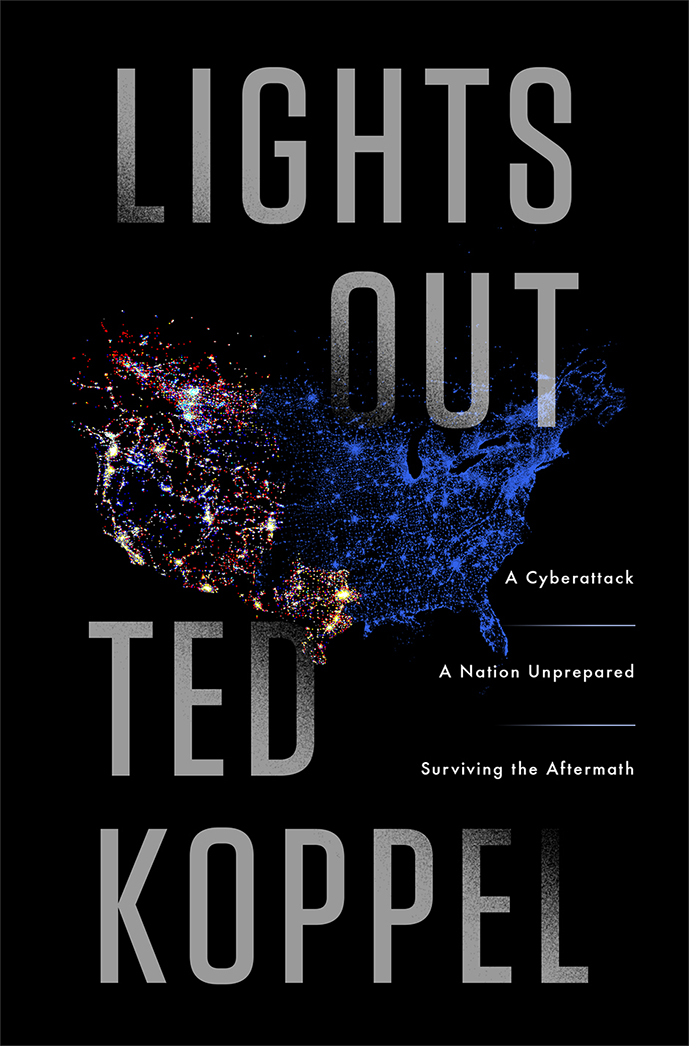
Lights Out - jacket imageWorld renowned and respected veteran reporter

Ted Koppel

joins us for a discussion of his close look at how our nation is — or is not — prepared for a devastating cyber attack.  We will also host a book-signing and have his book, “Lights Out” for sale during a reception after the talk.

January 26, 2015
4:30 PM – Registration

5:00 PM – Talk with Mr. Koppel

6:00 PM – Photo op and book signing
REGISTER TODAY!

ABOUT MR. KOPPEL’S EXPERIENCE
Earlier this year, we learned of a hacking attack that vacuumed up the personnel files of more than twenty million current and former federal employees. Cybertheft is now measured in the billions of dollars. However, all the cyber-espionage and cybercrime we have seen to date pales in comparison to a strikingly unreported threat to life as we know it: a cyberattack on our power grid. In LIGHTS OUT (on sale October 27), longtime Nightline anchor Ted Koppel—recipient of 42 Emmys—reveals just how likely such an attack is, how calamitous it could be, and how unprepared our government is. “We think of the Internet as a positive force, but it can also be used as a weapon of mass destruction,” says Koppel. “A well-designed cyberattack on just one of the nation’s three electric power grids could be crippling to our national infrastructure and would have to be regarded as nothing less than an act of war.”

It sounds like the stuff of science fiction, but in fact such an attack could be instantly and anonymously launched from a single laptop anywhere in the world. The impact on cities would be especially serious, with devastating food and water shortages after only days. In a previously classified letter, ten senior national security advisors warned that such an attack could knock out power in several states for a matter of months. A 2008 congressional commission concluded that only one in ten civilians would survive such an event.

Ted Koppel was incredulous when he learned how ill-prepared our government is, and became determined to dig deeper. In the course of his research he interviewed scores of national leaders across government and industry, often getting conflicting reports about whether there is an adequate plan for such a disaster, or whether there is any plan at all. Koppel spent time with members of America’s “prepper” movement, estimated at three million, as well as interviewing leaders of the Mormon Church, which is unrivaled in its disaster preparedness, boasting dozens of “bishop’s storehouses” stocked with food and other supplies. But how will ordinary civilians survive?