March 27: Lunch & Learn Budget Briefing with Michelle Mrdeza

Join the GTSC and Michelle Mrdeza to learn about the Federal budget and appropriations process. It is often a mystery to businesses yet it is one of the more critical pieces to getting Federal business—without a Federal appropriation, agencies will not have programs to fund!  President Obama is getting ready to submit his fiscal year 2014 budget to the Congress. The President “proposes” and Congress “disposes” and always remember:

“No money shall be drawn from the Treasury but in Consequence of Appropriations made by Law…”

— U.S. Constitution Article I, Section 9, Clause 7

Come learn about how Congress looks at budget requests for DHS; who makes decisions about funding levels and why;  what trade offs are being made with tight fiscal constraints; and ultimately where we can expect Congress to focus these tight resources in fiscal year 2014 and beyond.

About Michelle Mrdeza

As a founding partner of the Government Technology and Services Coalition, Michelle Mrdeza brings more than twenty-three years of experience in public service to its members, working primarily in the Executive and Legislative branches .At Cornerstone, Michelle leads the firm’s homeland security practice group. In that capacity, Michelle represents a broad and diverse set of clients, helping them identify funding opportunities within the Department of Homeland Security, introducing them to decision makers and putting clients in an advantageous position to successfully bid on multi-year contracts.of government. In 2007, Ms. Mrdeza retired as the majority staff director of the House Committee on Appropriations, Subcommittee on Homeland Security. She directed this subcommittee since its inception in February of 2003, gaining a unique understanding of the challenges and opportunities within both the Department of Homeland Security and the homeland security space. Michelle is President and CEO of MXM Consulting LLC and a Senior Advisor to one of the top public relations and lobbying firms in Washington, D.C., Cornerstone Government Affairs. As President and CEO of MXM Consulting, Michelle serves as a subject matter expert on homeland security and appropriations issues for Georgetown University, the Brookings Institution, the Homeland Security Institute, the MITRE Corporation and the Homeland Security and Defense Business Council. She also serves as a senior advisor to several small start-up companies, helping them navigate the dynamic and diverse homeland security environment.

At the GTSC, Michelle helps members understand how actions by the legislative branch can fundamentally impact opportunities in the security space. In particular, she helps members understand and navigate the annual appropriations process—and how that process affects their bottom line.

Michelle received a Master’s of Public Administration from George Washington University, a Bachelor of Science in Education from the University of Virginia, and was a senior research fellow at the UCLA School of Public Policy and Social Research. She was named to the Phi Alpha Alpha Honor Society and was the recipient of the 1998 George Washington University Department of Public Administration Distinguished Alumni Award. In 2006, Michelle received the US Coast Guard Meritorious Public Service Award.

Register now

The GTSC Joins DHS Cyber Awareness Coalition

The Government Technology & Services Coalition has joined the U.S. Department of Homeland Security’s Cyber Awareness Coalition, part of the Department’s Stop.Think.Connect. Campaign to raise national awareness of cyber threats.  At our Annual meeting last year, members of the Coalition voted to develop a Designation of Excellence for it members who “walk the walk” and not just “talk the talk.”  Part of that designation process includes assuring that companies with the Designation assume leadership roles in educating their own companies and employees on cyber security threats and awareness.

The Department of Homeland Security’s Stop.Think.Connect. initiative is a national public awareness campaign that seeks to empoer the American public to be safer and more secure online. Given that much of cybersecurity lies with individual users — awareness is a critical component of this campaign.

As a National Network Member of the DHS’ Cyber Awareness Coalition, the GTSC has included a cybersecurity component in its designation of excellence and devotes the month of October — Cybersecurity Awareness Month — to cyber  programming to educate the public, policy makers and our community’s private sector members.  For more tips, news and trends, sign up for the Stop.Think.Connect. monthly newsletter.  For more information on engaging with the GTSC’s efforts, contact Whitney Kazragis.

March 12: Writing Proposals for DHS & DOD

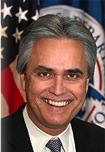
Join Tom Essig, former Chief Procurement Officer of DHS and GTSC Strategic Advisor, and Josh Kussman, President of Sentinel Business Advisory Services at The Sentinel HS Group, to gain an in-depth look at every stage in the proposal process — from the RFI to your response to an RFP. They will especially focus on proposal writing for DHS and DOD.
tom essigAbout Mr. Essig

As a senior acquisition professional with more than 30 years experience with the Department of Homeland Security (DHS) and Department of the Navy (DON), Mr. Essig has expertise in contracting and program management and is certified by the Departments of Defense and Homeland Security at career level III in both the contracting and program management.

He currently advises government and commercial organizations on federal acquisition and procurement and contracting matters through his company TWE, LLC. He also currently serves as a Procurement Subject Matter Expert with Kearney & Company.

His most recent federal position was as the Chief Procurement Officer for DHS from 2006 to 2009 where he was responsible for the management, administration and oversight of the department’s acquisition, strategic sourcing program, competitive sourcing program and providing leadership over the department’s $17 Billion in annual acquisitions.

Mr. Essig reported to office of the Assistant Secretary of the Navy (Research, Development and Acquisition) in February 2004. As Director of the Program Analysis and Business Transformation Division, he was responsible for overseeing analysis and support of contracting and business aspects of DON acquisition and other procurement programs and for the development and support of business transformation initiatives within DON. His division reflected the merger of the former Program Analysis and Support Division with the DON Acquisition Reform Office, and he was responsible for functions previously performed by those organizations.

From 1999 to 2004, Mr. Essig served as the Executive Director of the U.S. Navy Office of Special Projects (OSP). The OSP is a second echelon command reporting to the Commander, Naval Supply Systems Command and provides logistics, transportation, finance and other business and supply-related support to the fleet and shore establishment of the Department of the Navy. OSP’s mission supports every facet of the Navy. While in this assignment, Mr. Essig also served as the Director of the Navy Engineering Logistics Office.

Mr. Essig was selected as a member of the Senior Executive Service in 1995 and served as the Director of the Surface Systems Contracts Division of the Naval Sea Systems Command (NAVSEA). In this position he led a major procurement organization that planned, negotiated, and administered approximately 2,000 procurement actions valued at greater than $3 billion dollars annually.

Mr. Essig earned a bachelor’s degree from the University of Maryland in 1976 and graduated, with distinction, from the Industrial College of the Armed Forces in 1991. In 2000, he graduated from the Advanced Program Management Course at the Defense Systems Management College. He is a member of the Department of the Navy Acquisition Professional Community.

Mr. Essig began his federal career in 1976 when he entered the Navy’s Contracting Intern Development Program and was assigned to NAVSEA as a contract specialist, supporting various Naval weapon systems programs. In 1985, he was selected as the contracting officer for the Aircraft Carrier and Battleship programs. While in that position, he successfully negotiated what was then the largest shipbuilding contract in U.S. Navy history: a $4.3 billion contract for construction of two NIMITZ-class aircraft carriers. During his tenure at NAVSEA, Mr. Essig also served as the contracting officer for Standard Missile production, head of the Major Combatant Shipbuilding Branch, and Assistant Director of the Shipbuilding and Undersea Systems Contracts Divisions. In 1997, he received Vice President Gore’s Hammer Award for his work as a member of the Joint Navy/Industry Submarine Combat System Integrated Development Plan Team. He was awarded the Department of the Navy Superior Civilian Service Award in 1999 and the Distinguished Civilian Service Award in 2004.

JoshKussmanHeadshot

About Mr. Kussman

Mr. Kussman served as Senior Policy Advisor to U.S. Customs and Border Protection (CBP) Commissioner Robert C. Bonner from Oct. 2003 to December 2005. In 2005, Commissioner Bonner named him Director of Policy for CBP. In that capacity, Mr. Kussman led the development and coordination of agency-wide policy for CBP.

Mr. Kussman has extensive experience on homeland security matters related to border security, terrorism, international trade & travel, customs, immigration, transportation and intelligence.

While serving as Senior Policy Advisor to Commissioner Bonner and Director of Policy for CBP, Mr. Kussman:

  • Advised Commissioner Bonner on a wide array of matters relating to CBP operations and policies, including the integration of CBP into one agency following the creation of CBP and the Department of Homeland Security (DHS).
  • Advised Commissioner Bonner and the Chief of the Border Patrol on policies and operations related to the transition of the Border Patrol into CBP and the establishment of a more nationally-directed, headquarters driven Border Patrol, including:
    • Drafting and implementing the new National Border Patrol Strategy.
    • Reorganizing and re-invigorating the Border Patrol’s new headquarters structure.
    • Developing the policies and strategies for the America’s Shield Initiative (ASI).
    • Developing strategies for the use by CBP and the Border Patrol of Unmanned Aerial Vehicles (UAVs).
  • Coordinated CBP’s efforts, in conjunction with DHS, to develop and implement the Secure Border Initiative (SBI).
  • Led CBP’s process of creating CBP Air, which resulted from the merger of former Air and Marine Operations unit with the U.S. Border Patrol’s aviation division into a single integrated office within CBP. CBP Air is the largest civilian law enforcement air program in the world.
  • Directed CBP’s efforts to coordinate CBP policies and operations with the Detention and Removals Office (DRO) of U.S. Immigration and Customs Enforcement (ICE).
  • Led CBP’s coordinated effort to expand the use of expedited removal procedures, for the first time, to Border Patrol Agents operating between ports of entry. This effort involved developing regulations, policies and procedures, providing training to thousands of Border Patrol Agents, and coordinating the implementation of this program with ICE and U.S. Citizenship and Immigration Services (CIS).
  • Served as CBP’s primary representative to the Interagency Incident Management Group (IIMG), which advises the Secretary of the Department of Homeland Security on important policy and operational issues during significant incidents and contingencies.
  • Developed international, multilateral, and bilateral strategies for increasing the security of our borders, including:
    • The Arizona Border Control Initiative (ABCI);
    • The Immigration Advisory Program (IAP);
    • Coordinated CBP’s participation in the Security and Prosperity Partnership (SPP);
    • Coordinated CBP policies related to the Western Hemisphere Travel Initiative, the National Security Entry Exit Registration System (NSEERS), and the biometric collection of information from travelers.
  • Worked closely with the Homeland Security Council, the State Department, the DHS Offices of the Secretary, the United States Coast Guard, and the Bureau of Immigration and Customs Enforcement on visa, immigration, maritime security, intelligence, and other homeland security matters.

Before serving in the Department of Homeland Security, Mr. Kussman was an attorney with the San Francisco office of O’Melveny and Myers, where he specialized in intellectual property litigation and white-collar criminal defense.
Mr. Kussman also served as a Lieutenant in the U.S. Navy Reserve. Mr. Kussman is a 1998 graduate, with honors, of the University of Chicago Law School. He graduated cum laude from Williams College in 1994.


Register now


March 14: CEO to CEO Networking Breakfast with John Rothenberger of SE Solutions

john rothenbergerJohn Rothenberger
Founder & CEO, SE Solutions

Thursday, March 14, 2012 | 9:00 – 11:00 AM REGISTER NOW

John Rothenberger is the founder of Strategic Enterprise Solutions, Inc. (SE Solutions). He is a successful entrepreneur and seasoned business executive with over 18 years of executive leadership, strategic business planning, business development, and management experience.
John graduated from James Madison University with a Bachelor of Business Administration. He is currently a member of the JMU Executive Advisory Council, serves as the Entrepreneur In-Residence for the College of Business and is a regular judge for the annual business plan competition. John is also a University of Pennsylvania Wharton School Business Fellow.
“I watched the smoke coming out of the Pentagon and felt moved to help our nation fight back in someway.” — John Rothenberger, CEO, SE Solutions


About SE Solutions — a mission-oriented company working at DHS, was founded shortly after 9/11 with a specific mission of helping the public sector respond to the attacks.. John will discuss the decision to start SE Solutions, some of the components that were essential to his success and how the company has navigated the evolving landscape at the Department.
Strategic Enterprise Solutions, Inc. (SE Solutions) is a go-to management and information technology services firm for federal agencies that focus on protecting and defending our nation’s security. In a rapidly changing threat landscape, we have the organizational agility, deep homeland security experience, cultural insight and multidisciplinary expertise to help our customers accomplish today’s mission and anticipate tomorrow’s demands, efficiently and cost-effectively.Our people live and breathe homeland security. We apply a unique hybrid approach that fuses technology with program management, strategy with implementation, and deep homeland security experience with private sector innovation to help our customers support their missions and overcome their most complex challenges.

March 20: Insight Session with Dr. Starnes Walker, Chief Technology Officer, U.S. Navy Cyber Command

The Coalition welcomes Dr. Starnes Walker, the Chief Technology Officer & Technical Director of the U.S. Fleet Cyber Command/U.S. 10th Fleet of the U.S. Navy, to its Insight Session on March 20.

Starnes WalkerAbout Dr. Starnes Walker

Dr. Walker now serves as the Chief Technology Officer & Technical Director for the U.S. Fleet Cyber Command & U.S. 10th Fleet, U.S. Navy.  Dr. Walker’s last post was serving as the Chief Engineering and Technical Director of The University of Hawaii System.

Previously Under Secretary of Science and Technology Jay Cohen (RADM-Ret) recruited Dr. Starnes E. Walker from the Office of Naval Research to be the new Director of Research for the S&T Directorate at the U.S. Department of Homeland Security. Formerly the Chief of Naval Research, Secretary Cohen previously worked with Walker, who served as Technical Director and Chief Scientist and top civilian for the Naval S&T program. As Director of Research for DHS, Walker oversaw the Office of National Laboratories, the Office of University Programs for the DHS Centers of Excellence, the four DHS in-house laboratories and T&E Centers, and the Academic Fellowship and Scholarship Program Office.  Additionally Walker served as the senior S&T leadership representative to OSTP, the Congress, the IC, and OGOs internationally. He joined the S&T Directorate in January, 2007.

Dr. Walker joined the Office of Naval Research in September 2004 and served as the Technical Director and Chief Scientist reporting directly to the Chief of Naval Research. Working with the CNR, Dr. Walker was responsible for structuring and leading an S&T organization that ensures technological superiority for the Navy and Marine Corps. Dr. Walker’s budget authority was annually $2,200M, plus an additional average Congressional plus-up of $700M, and Dr. Walker served in a supervisory role for a workforce of 5494 civilian and military for ONR and ONR’s Corporate Laboratory, the Naval Research Laboratory. Dr. Walker’s leadership spanned the university community, the government laboratory structure, industry, and international government defense organizations to bring their resources and technical capabilities into the Naval S&T program, thereby ensuring strategic Naval capabilities to the future and avoiding technological surprise for the nation.

Dr. Walker’s previous position was as the Acting Associate Laboratory Director for National Security, serving as the National Security Coordinator at Argonne National Laboratory. Most recently, Dr. Walker served on the DoD’s Defense Science Board in the Summer Study to define Future Strategic Strike Systems with STRATCOM as the COCOM sponsor.

Dr. Walker is a former member of the Senior Executive Service and served as the Senior Advisor for Science & Technology to stand up the Defense Threat Reduction Agency (DTRA) from 1999-2003. Dr. Walker was a standing member of the Defense Science & Technology Advisory Group for DDR&E in OSD and served as the senior S&T executive at OSD along with the S&T Executives of the Services, DIA, DARPA, MDA, and the Deputy Under Secretary for S&T.

Register now

OMB Sequestration Memo

OMB released its memo on February 27 outlining Federal agencies’ responsibilities under the sequester.  The full memo is here:
Sequestration memo from OMB m-13-05
Agencies will need to:
  • reduce approximately 9% for non-defense programs and 13% for defense programs
  • maintain and prioritize mission
  • identify any major contracts and grants they plan to cancel, re-scope delay or change payment amounts
  • identify the number of employees furloughed, length of the furlough and timing
  •  inform stakeholders – including Federal contractors – and partners in a timely and complete manner of sequestration using as many specifics as possible
  • agencies should assure that any contract actions are cost-effective and minimize the impact on mission
  • program, acquisition, financial/budget management, information technology and legal should work together to make contract determinations
  • new contracts or exercise options should only be entered in to if they support high priority initiatives or failure would expose the government to significant costs in the future
  • de-scope or terminate for convenience contracts that are no longer affordable — after evaluation of the cost and benefits and appropriately inform and negotiate with contractors
  • in the case of grants, loans, and other Federal financial assistance, agencies should ensure that new obligations or existing agreements protect the mission at the post-sequestration level and inform recipients as early as possible
  • implement internal risk management strategies and internal controls that provide hieghtened scrutiny of certain types of activities from sequestered accounts including:  hiring new personnel, issuing discretionary monetary awards to employees, incurring obligations for new training, conferences and travel.

5 Minute Survey on Sequestration: Share the Impacts on YOU!!

GTSC is currently conducting a short survey to assess the impacts and actions being taken by the private sector to prepare for sequestration.  According to our mission, part of GTSC’s role is to understand and convey impacts of government action on our community.  Please take a moment to take the confidential survey and provide your input to this historic impasse.

TAKE THE SURVEY.

GTSC Expands Strategic Advisors

Cooper, Stolarski, Haney and Holland further enhance A-List of homeland and national security leaders

New Advisors

Washington, D.C. – February 20, 2013 – The Government Technology & Services Coalition (GTSC) announced today that former Acting Assistant Administrator for Information Services & Chief Information Officer of the Federal Aviation Administration (FAA) Steve Cooper and Jim Stolarski, a renowned senior management consulting executive, have joined GTSC’s board of strategic advisors. P. Allen Haney, fellow for the American Society of Association Executives and president of P. Allen Haney Company and Earl Holland, vice president of the Strategic Alliance Professionals Washington, D.C. chapter and CEO of Growth Strategy Consultants also joined the board.

“I have always been committed to the small and mid-sized business community, and believe GTSC offers a terrific platform for sharing my experience and lessons learned to help government and industry leaders work together more effectively,” said Cooper. “I’m excited to engage with the incredible community within GTSC committed to achieving the mission of homeland and national security despite these austere budgets.”

In addition to his work at the FAA, Cooper was the first CIO of the U.S. Department of Homeland Security (DHS), where he led the IT strategy for homeland security, guided the implementation of unclassified and classified networks for the new department and provided the vision for the use of IT across the department. He formerly served as vice president and CIO of the American Red Cross and special assistant to the president for homeland security and senior director for information integration in the White House Office of Homeland Security. Mr. Cooper was named one of the top 100 CIOs in America by CIO Insight.

Jim Stolarski brings over 28 years of experience in strategy, operations reengineering and mergers and acquisitions to the Coalition, a decade of that working with public agencies within the departments of homeland security, justice and state. He retired from Accenture in 2011 and currently advises small and large businesses through his firm Nextesse.

“GTSC has created an exciting nexus of government and industry at a critical time for the country. The dedication of these people to our nation’s homeland and security missions is refreshing, and I look forward to contributing my experience helping companies execute exceptionally to forward our mutual goals of a safer, more resilient country,” said Stolarski.

They join a number of esteemed advisors, including Chani Wiggins, former assistant secretary for legislative affairs at DHS; Richard Skinner, former inspector general for DHS; Michelle Mrdeza, former majority staff director, House Committee on Appropriations, Subcommittee on Homeland Security; Jim Williams, former commissioner of the General Services Administration’s Federal Acquisition Service; Dr. Steve Bucci, former deputy assistant secretary of defense for homeland defense and defense support to civil authorities, and Bill Carroll, former official for U.S. Immigration and Naturalization Service. See all the strategic advisors at www.GTSCoalition.com.

-###-

The Government Technology & Services Coalition (GTSC) is a nonprofit, non-partisan association of innovative, agile small and midsize company CEOs that create, develop and implement solutions for the federal homeland and national security sector. The GTSC’s mission is to provide exceptional advocacy, capacity building, partnership opportunities and marketing for small and midsize companies in the federal security market.

For more information, please email Whitney Kazragis or call 706.799.1806.