TroopTree

The Government Technology & Services Coalition works to find resources for its members, soldiers and our homeland and national security community.

TroopTree.com is a FREE video communication service for deployed military to keep in touch with friends and family back home. Because TroopTree.com does not require both users to be on-line at the same time, Trooptree is perfect for keeping in touch across time zones or across the globe.

  • Using a webcam or iPhone, deployed troops can record videos for friends and family back home, and the recipients can watch these videos any time and then reply with a video of their own. Recipients are notified by email that they have a new video waiting for them at TroopTree.com
  • TroopTree.com also allows users to set the delivery date of the video to any date in the future, so when internet access is unpredictable, a soldier can still make sure that their child gets a video delivered on their birthday.
  • Recipients can archive the videos forever on our server for free, so families will always be able to keep those video memories if something unfortunate happens to a loved one.
  • TroopTree.com also features a “Thank You Vault” where members of the public can come to record videos either thanking or showing support for our troops. People from around the country, including celebrities and athletes have recorded videos for you!
  • Record a bedtime story for your kids when you are on the road, share some personal thoughts with loved ones so they can treasure them FOREVER, or just share a fun story about life with someone far away, or around the block.

Learn more about Troop Tree here.

Ten Cyber Issues Board and Chief Legal Officers Need to Know (and Worry) About

Boards of Directors have several fiduciary duties to uphold. Meeting such duties requires addressing cybersecurity and data loss. While this rapidly evolving area has its own unique challenges, boards, as well as the legal officers who advise them, face the same question about how to address cybersecurity, data loss, and data theft as they do any other critical ssue-are they acting prudently, reasonably, and responsibly? More and more boards are now asking themselves, and the legal counsel who advise them, these questions and placing cybersecurity and data theft risks at a higher level of priority than even physical disasters. The factors highlight 10 areas boards and their legal advisors should consider before their companies are faced with a real-world cyber threat.

1. The stakes to share value and the bottom line are high. Cybersecurity and data theft may sound like abstract concepts, but they have impacts-including financial ones-in the real world. It’s been estimated that the global cost of cyberattacks in 2011 was $388 billion in direct financial loss and the cost of recovering from the attacks. Losses can take the form of stolen intellectual property or trade secrets, data destruction, disruption of critical systems, or even damage to physical assets. They also can include the exposure of customer and employee personal information. Any of these scenarios can result in material losses impacting a company’s reputation, bottom line, and share price.

2. The hackers are two steps ahead of you already. While today’s headlines are focused on standard types of data breaches and hacking activity-viruses, malware, physical break-ins, etc.-the next generation of threats, such as heretofore unforeseen attacks (so-called “zero day attacks”), has yet to make it into the public consciousness, but directors and their advisors have to be aware of them. The constantly mutating tactics cyber criminals employ will pose a serious challenge to any company that uses electronic systems. This means boards and their advisors, including GCs, will need to focus their attention on risk mitigation in this area for decades to come.

3. Cyber and data loss threats pose merger risks. Acquiring companies may be subject to significant losses and boards may be exposed to shareholder suits should adequate cybersecurity and other data protection measures not be taken in the context of corporate M&A activity. If a company acquires a target with a malware-infested IT system without appropriate due diligence to avoid that outcome, there is a potential for a wide range of liabilities. Cybersecurity and other data protection methods should be added to the long roster of criteria a board and its legal and business advisors use when evaluating a potential acquisition and acquisition documents should contemplate and provide for appropriate representations, warranties, and indemnities related to cyber thefts and attacks.

4. Lost or stolen intellectual property or customer or employee information can turn a deal from sweet to sour. Imagine your company acquires a target for hundreds of millions of dollars. Then their systems are hacked and the blueprints for the widget that made the company attractive are stolen. Knockoffs flood the market and the company’s value evaporates. Or imagine your company is about to launch a new software program, but it is swiped from your servers days before launch. Similar issues may arise if sensitive customer or employee data is exposed. Among the many questions that will be asked – by many, including investors, business partners and regulators – in the aftermath, is whether or not the board and its legal advisors acted with reasonable care to prevent such incidents.

5. There is a maze of state and federal data protection and data loss notification requirements to navigate.With State Attorneys General and an assortment of federal agencies, including the Federal Trade Commission, having a hand in data protection, breach notification, and disclosure requirements, companies should have plans in place for how to respond in a timely fashion should a breach occur (and, of course, be well-versed on its legal compliance obligations beforehand). The myriad disclosure and notification requirements and cybersecurity obligations will only grow and enforcement activity is likely only to increase, so it is incumbent on companies and their counsel to stay abreast of these developments.

6. The failure to be fully informed of and proactive against cybersecurity and data loss risks could lead to litigation. Companies, directors, and corporate managers could be exposed to litigation risks and potential liability for compromised data, systems, and infrastructure resulting from a cyberattack or data loss. Such claims could include third-party claims for breach of contract, breach of warranty, and/or statutory or common law legal requirements under both state or federal law; claims by state and federal regulators for failure to comply with specific data protection and cybersecurity laws (as well as more general unfair and deceptive trade practice-type laws), shareholder claims for breaches of fiduciary duty in failing to take appropriate steps to protect the company’s assets, and business from cyber theft or other cyberattacks; and for publicly traded companies, investor securities law claims and SEC actions for failing to adequately disclose cyber risks.

7. If the breach doesn’t get you, the litigation will. Even in those instances where a company or its directors are successful in defending a claim following a cyberattack or data loss, such litigation is likely to be expensive and a time-consuming distraction for management and the board. Beyond this, the cyberattack and the resultant attention from related legal proceedings could result in serious reputational harm.

8. There are federal programs available to help mitigate corporate liability through the SAFETY Act. Companies can gain valuable protections offered through an advanced approach to the Support Anti-Terrorism by Fostering Effective Technologies Act of 2002 (known as the SAFETY Act). This law provides tort liability protections for products and services that can be used to detect, defend
against, or respond to cyberattacks. It is essential that boards and their legal advisors be aware of
these programs and assess their applicability to cybersecurity products and services they either
procure or deploy on their own.

9. Insurance coverage is available through traditional or tailored policies. The demand for cybersecurity/data loss-specific coverage is incredibly high, placing pressure on availability, though some forms of traditional-and widely available-coverage such as Commercial General Liability may provide coverage for some types of claims. However, insurers are quickly working exclusions into these kinds of policies. Working with experienced coverage counsel can ensure the right kinds and amounts of coverage are in place.

10. Outside counsel comes with the benefit of attorney-client privilege.While there are armies of consultants at the ready to advise companies should a cyber or data loss incident occur, only legal counsel can offer the shield of attorney-client privilege, thereby ensuring that sensitive information about investigations cannot be used in litigation. Having your cybersecurity/data privacy attorney on speed dial is a good idea.

Is liability inevitable or can steps be taken to mitigate or eliminate it?
Cybersecurity and data loss liability and litigation is in a similar stage as environmental law in the
1970s: there has been a broad awakening that liabilities exist-and that they may be vast.
Companies have no choice but to assess their exposure and plan accordingly. That means in
today’s technology, dependent of business environment, it has become imperative that boards (or
their equivalents) and their business and legal advisors devote appropriate attention to
cybersecurity issues as a matter of good corporate practice and appropriate risk management.

This could mean causing management to (i) undertake a thorough cyber/data loss risk assessment
that includes both company-specific risks and risks to critical third parties that would adversely
impact the company, and (ii) identify and implement best practices relevant to the company’s cyber
and data loss risks.

Most importantly, boards and their senior management, including GCs, have to be aware of the
threats and have management take measures to mitigate them. Failure to do so could easily lead to
losses and liability.

By Divonne Smoyer, Brian E. Finch, & Emanuel Faust

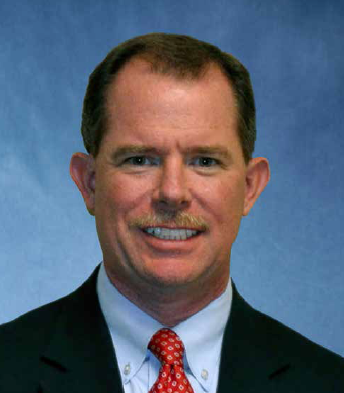
Brian FinchQuestions? Ask GTSC’s Strategic Advisor!

Brian Finch
Partner, Dickstein Shapiro LLP
[email protected]
(202) 420-4823 


DISCLAIMER
The GTSC Legal Limits Brief is made available by GTSC for educational purposes only as well as to provide you with general informaiton and a general understanding of the law and legal changes that may impact your business, not to provide specific legal advice. No attorney client relationship is established with GTSC or our legal strategic partners by reading this brief. This information shold not be used as a substitute for competent legal advice from a licensed professional or attorney. Copyright © 2013. All Rights Reserved.


Oct. 10: Cyber Security Acquisition: What is the Government Buying?

Join the Government Technology & Services Coalition (GTSC) during October’s National Cyber Security Awareness Month for an in-depth look at the acquisition landscape for cyber security programs across DoD, DHS, DOS, and DOJ during its Capacity Building Session, Cyber Security Acquisition: What is the Government Buying? GTSC’s Strategic Partner Dickstein Shapiro LLP will track acquisition activity and provide some insights into how the Federal government is making cyber security investments. This is a “must attend” program if you are interested in understanding the Federal cybersecurity space.

Speakers:

Brian FinchBrian E. Finch

Partner

Dickstein Shapiro LLP

Brian Finch, a partner in Dickstein Shapiro’s Washington, DC office, is head of the firm’s Global Security Practice. Named by Washingtonian magazine in 2011 as one of the top 40 federal lobbyists under the age of 40, Mr. Finch is a recognized authority on global security matters who counsels clients on regulatory and government affairs issues involving the Department of Homeland Security, Congress, the Department of Defense, and other federal agencies. His focuses include liability mitigation, protection of critical infrastructure, state and local grant funds, WMD response preparations, chemical security, cyber security, and border and trade security.

Mr. Finch is a Senior Advisor to the Homeland Security and Defense Business Council and also is a member of the American Bar Association’s Homeland Security Executive Committee for the Administrative Law Section. Mr. Finch served as an inaugural Senior Fellow at George Washington University’s Homeland Security Policy Institute. He also was a member of the Heritage Foundation/Center for Strategic and International Studies Task Force for Examining the Roles, Missions, and Organization of the Department of Homeland Security. Mr. Finch is a Professorial Lecturer in Law at The George Washington University Law School, where he co-teaches Homeland Security Law and Policy. He is admitted to practice in the District of Columbia.
Mr. Finch speaks and writes extensively on global security and terrorism matters, as well as other public affairs issues. He has testified on the implementation of the SAFETY Act twice before the U.S. House of Representatives Committee on Homeland Security. He is regularly quoted in publications such as CQ Homeland Security and Washington Technology, and has been profiled by Government Security News Magazine, a leading homeland security journal. Examples of his articles include “Utilizing the SAFETY Act to Assist with CFATS Process,” which appeared in Business & Industry Connection in October 2009; “The SAFETY Act Affords Protections For Smart Grid Players,” which appeared in Renew Grid in October 2009; and “How Sports Owners Can Find Protection in SAFETY,” which appeared in the Sports Business Journal in November 2006. He also has appeared on television news programs such as MSNBC Live as a global security commentator.

Graham (Rusty) MathewsGraham (Rusty) Mathews

Senior Legislative Advisor

Dickstein Shapiro LLP

Rusty Mathews, the senior legislative advisor in the Public Policy & Law Practice of Dickstein Shapiro, joined the firm in 1996. Mr. Mathews’ specialties encompass representation, on a variety of legislative and appropriations issues, of the environmental community, electric utilities, competitive power producers and marketers, healthcare providers, direct marketers, homeland security and related high-tech industries, insurance and reinsurance providers, and clients involved in sports, entertainment, and Internet gaming.
During the years 1995 through 1996, in the office of U.S. Senator Barbara A. Mikulski, Mr. Mathews served as Chief Minority Clerk, Senate Appropriations Subcommittee on Veterans Affairs, Housing and Urban Development, and Independent Agencies. He managed all aspects of Congress’s second largest discretionary appropriations bill ($90 billion). He was also responsible for budget development and policy management for 25 federal departments and agencies, including the Departments of HUD and VA, the Environmental Protection Agency, the National Science Foundation, NASA and Federal Emergency Management Agency, and 15 independent boards, commissions, and offices.
In 1989 through 1994, in the office of U.S. Senator Robert C. Byrd, Mr. Mathews was the Assistant Majority Clerk, Senate Appropriations Subcommittee on the Department of Interior and Related Agencies. He managed all aspects of the Department of Interior appropriations bill relating to annual budget requests and policy development for the Bureau of Land Management, the U.S. Geological Survey, the Bureau of Mines, Office of Surface Mining, Smithsonian Institution, and the fossil energy accounts for the Department of Energy. He also served as principal negotiator for the Midwestern and Eastern coal states during Congressional deliberations on the Clean Air Act Amendments of 1990.
Among Mr. Mathews’ career highlights are membership on the Senate Democratic Policy Committee, serving as Deputy Vice President for External Affairs with the U.S. Synthetic Fuels Corporation, and being Director of Senate Relations with the Department of Energy.

Register now

Oct. 16: Mentor Session with Harris IT Services

Join the Government Technology & Services Coalition for a Mentor Session with Mr. Keith Bryars, the Client Executive for National Security and Federal Law Enforcement at Harris Harris IT Services on Wednesday, October 16.

About Harris IT Services

A leading provider of end-to-end solutions in mission-critical IT transformation, managed solutions, and information assurance for defense, intelligence, homeland security, civil and commercial customers. With over 3,300 professionals worldwide, Harris IT Services offers demonstrated past performance, proven technical expertise and innovative solutions in supporting large-scale IT programs that encompass the full technology lifecycle.

About Keith Bryars, Client Executive

Keith Bryars is a client executive with Harris IT Services. Harris IT Services designs, deploys, and operates secure communications systems and information networks with optimal reliability and affordability for high-profile customers in government and commercial markets, delivering expertise in cloud services, cyber security/information assurance, enterprise managed services, mobility, and systems integration worldwide.

Mr. Bryars joined Harris Corporation in April 2012 following a 25-year career as a senior executive special agent with the Federal Bureau of Investigation (FBI). Throughout his FBI career, Mr. Bryars was involved in a number of significant highprofile investigations involving counterterrorism, cybersecurity, counterintelligence, public corruption, and violent crimes. He is considered a subject matter expert in Federal Law Enforcement and National Security matters.

At the FBI, Mr. Bryars led and managed field operations across the country and served in the FBI’s Kansas City, Miami, Nashville, Birmingham, and Washington field offices, and at FBI headquarters in Washington, DC. As an FBI senior executive, Mr. Bryars helped lead the FBI’s strategic transformation, post-9/11, to an intelligence-led, threat-driven organization.

He also served as a senior executive at the FBI’s Engineering Research Facility at the Operational Technology Division at Quantico, Virginia, where he oversaw all of the FBI’s technical programs supporting FBI field operations and intelligence collection, and directed a variety of technical capabilities and operational technology support to the FBI and other Federal Law Enforcement and National Security partners.

Before his FBI career, Mr. Bryars worked as a mechanical engineer in the nuclear power industry.

Mr. Bryars holds a bachelor’s degree in mechanical engineering from Auburn University.

Harris is an international communications and information technology company serving government and commercial markets in more than 125 countries. Harris is dedicated to developing best-in-class assured communications® products, systems, and services.

About GTSC’s Mentor Companies

The Government Technology & Services Coalition’s (GTSC) Mentor companies understand how critical a robust, successful homeland and national security market is to our nation’s security.  Together with our members, these firms are committed to bringing the innovation, ideas and agility of small business to the experience, infrastructure and resources of large companies.  GTSC mentors join us to provide advice and counsel to small and mid-sized companies, find new and innovative teaming partners, address challenges in the prime/subcontractor relationship in a neutral environment and improve mentor/protégé communication and success.  Both our large and small companies recognize that the best security for our citizens – both physically and economically — is derived from the ability of our markets to meet the challenges posed by terrorism, natural disasters, and criminal activity.


Register now

Key Cybersecurity Issues for Government Contractors

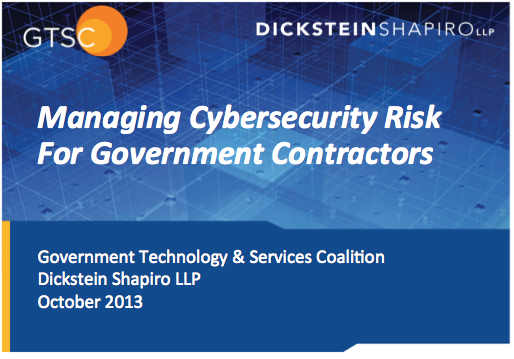
Dickstein Shapiro LLP and the Government Technology & Services Coalition (GTSC) held a webcast, “Key Cybersecurity Issues for Government Contractors.” This interactive program, of particular interest to government contractor compliance officers, CIOs, CISOs, General Counsel, and any other C-suite members, discussed how the federal government is planning on fundamentally altering its acquisition policies to make the cybersecurity of its contractors a top priority.

The discussion included:
– Proposed Federal Acquisitions Regulation (FAR) changes relating to President Obama’s Cybersecurity Executive Order;
– Planned changes to procurement requirements based on independent agency actions;
– Congressionally mandated cybersecurity requirements; and
Ways contractors can prepare for these changes

Speakers included:

Brian Finch, Partner, Global Security, Dickstein Shapiro LLP

Justin Chiarodo, Partner, Government Contracts, Dickstein Shapiro LLP

Emile Monette, Senior Action Officer for Cyber Security Policy, Government Services Administration

Kristina Tanasichuk, CEO, Government Technology & Services Coalition

View the slides here or watch the webinar by clicking the link below.

Screen Shot 2013-10-09 at 2.21.39 PM


GTSC Awarded Strategic Partner of the Year by Linden Resources

Washington, D.C. – September 30, 2013 – Linden Resources honored the Government Technology & Services Coalition (GTSC) with its Strategic Partner of the Year award for GTSC’s work with the Vets Ready2Work program. The partnership helps veterans find meaningful employment on their return to civilian life by connecting veterans with disabilities, trained by the Vets Ready2Work program with employers in the GTSC community.

“As companies working in homeland and national security, GTSC members are committed to contributing to this critical community and assuring that we take care of those who sacrifice so much for our nation,” said Kristina Tanasichuk, CEO and Founder of GTSC. “Assuring that these veterans find meaningful work to reintegrate and continue to support their families is the least we can do.”

GTSC member companies are committed to working with Linden to hire veterans, providing feedback on workplace requirements and referring veterans to the program. GTSC members DAI; Dynamic Security Concepts, Inc.; Man-Machine Systems Assessment; NCI, Inc.; Pherson Associates, LLC; PReSafe Technologies LLC; SCI Consulting Services, Inc., The Strativest Group LLC; and ProQual-I.T., Inc. committed to work to place veterans in meaningful positions.

“Our strategic partnership with GTSC has increased our business opportunities and brought more focus to hiring our nation’s veterans,” said Linda Chandler, the CEO of Linden Resources. “This partnership continues to advance Linden’s mission of expanding employment opportunities for people with disabilities.”

Pictured above, left to right: Linda Chandler, CEO of Linden Resources; Kristina Tanasichuk, CEO of GTSC; and  Lisa Lopinsky, former Board Chair of Linden Resources.

-###-

The Government Technology & Services Coalition (GTSC) is a nonprofit, non-partisan 501(c)(6) association of companies that create, develop and implement solutions for the federal homeland and national security sector. Our mission is two-fold: first, to provide exceptional advocacy, capacity building, partnership opportunities and marketing in the Federal security space for small and mid-sized companies. Second, to support and assist our government partners achieve their critical missions with the highest integrity; best and most innovative technologies; and results-based, quality products and services to prevent, protect against, mitigate, respond to and recover from any terrorist attack or natural disaster. For more information on these mentors and the Government Technology & Services Coalition, please visit www.GTSCoalition.com.

Linden Resources was founded fifty-three years ago by a group of Northern Virginia parents seeking jobs for their children with disabilities. Today, Linden remains focused on its mission to increase employment opportunities for people with disabilities. It operates three commercial businesses that generate revenue to support its mission, which include: print and mailing services; warehousing and fulfillment; and document destruction. The organization manages over a dozen federal contracts, employing people with disabilities. For more information about Linden Resources, visit www.Linden.org.


DHS CPO Letter Regarding Contract Funding

It was announced Thursday, September 26, 2013 that USM Rafael Borras will act as the Department of Homeland Security Deputy Secretary (S2). Chris Cummiskey (current DUSM) will act as the interim USM. The following industry partner letter was also issued on Thursday, September 26, 2013 by the Office of the Chief Procurement Officer at the Department of Homeland Security. Read the FedBizOpps annoucement here.

Dear Industry Partner,

This is to advise the Department of Homeland Security (DHS) contractor community of the DHS plans regarding contract actions that may be necessary in the event contract funding is affected by a lapse in appropriations.
As you are aware, the budget for fiscal year 2014 has not been enacted and may result in a lapse in the funds designated to purchase certain supplies and services as well as reduction in the Government’s capacity to administer DHS contracts. As a consequence of the lapse, certain planned procurements may be cancelled and certain existing contracts may be stopped, reduced in scope, terminated or partially terminated.

Should DHS determine that any of these actions is necessary, the Contracting Officer for each of the affected contracts will provide prompt appropriate notice to the contractor in accordance with the terms and conditions of the affected contract. Notices will contain the direction necessary to comply.

If a contract will not be affected by the lapse in appropriations, DHS does not plan to provide any separate notifications or communications of that fact. Unless a contractor is provided a formal notification to the contrary, all DHS contractors must continue to comply with all terms, conditions, requirements and deliveries specified in their contract(s).
Thank you for your continued partnership with DHS, and for your cooperation as we work together to manage a potential lapse in appropriations.

Sincerely,
Nick Nayak
Chief Procurement Officer

Sept. 26: National Preparedness Month: Focus on FEMA & HHS

Join the Government Technology & Services Coalition (GTSC) and the InfraGard National Capital Region Members Alliance for National Preparedness Month: Focus on FEMA & HHS on Thursday, September 26. Register for this program here.

Agenda At A Glance
8:00 AM: Registration & Breakfast
8:30 AM: Conference Introduction
8:40 AM: Keynote: HHS Preparedness & Response Priorities
9:15 AM: FEMA’s Policy & Program Priorities
10:00 AM: GTSC Designation of Leadership Excellence & American Red Cross Ready Rating program
11:00 AM: Building Resilient Communities through Public Private Partnerships 
12:00 PM: Luncheon Keynote
1:30 PM: Getting It Done: Prevention & Preparedness for All Hazards 

Speakers:

 
Sara BryantSara Bryant
Program Development Section Chief, Preparedness Grants Division, FEMA

Sara Bryant is Section Chief in the Federal Emergency Management Agency’s Grant Programs Directorate (FEMA GPD). In her current capacity, she is responsible for the development and interagency coordination of FEMA’s non-disaster preparedness grant portfolio,providing advice and guidance to senior FEMA management on pertinent homeland security programs and priorities, the effectiveness of those programs as implemented in the field, recommends needed changes and improvements, and provides input on complex issues impacting Department of Homeland Security grant programs. Since her time with GPD, Sara has also coordinated preparedness planning efforts with state and local homeland security officials throughout the country, and provided expert guidance on the Department’s homeland security and emergency preparedness programs. She has previously served as the GPD’s Preparedness Officer for states to include California, Ohio, Iowa, Illinois, New Mexico, and Michigan. Sara works in Washington, DC and has been with FEMA GPD since 2006.

Brian KamoieBrian Kamoie
Assistant Administrator, Grant Programs, FEMA

Brian Kamoie was appointed by President Obama as Assistant Administrator of the Federal Emergency Management Agency for Grant Programs in April 2013. In that capacity he oversees over $17 billion in grant programs to build, sustain, and improve our national capability to prepare for, protect against, respond to, recover from, and mitigate all hazards. Prior to his appointment, Mr. Kamoie served as Senior Director for Preparedness Policy on the White House National Security Staff (NSS) from 2009 to 2013. In that role he led a team of professionals in the development of national policy related to all-hazards preparedness, individual and community resilience, public health and medical preparedness, domestic critical infrastructure protection and resilience, national security/emergency preparedness communications, and preparedness grants.
David KaufmanDavid Kaufman
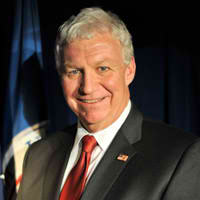
Associate Administrator for Policy, Program Analysis, and International Affairs, FEMA

David J. Kaufman is FEMA’s Associate Administrator for Policy, Program Analysis, and International Affairs. Appointed in September 2009, he is responsible for providing leadership, analysis, coordination, and decision-making support to the FEMA Administrator on a wide range of Agency policies, strategy, plans, programs, and key initiatives. Mr. Kaufman has extensive experience with homeland security and emergency management issues. He has been a member of the faculty at the Naval Postgraduate School’s Center for Homeland Defense and Security, where he has taught in the Center’s graduate and executive level education programs; was the Safety and Security Director for CNA, a non-profit think-tank; and has previously served in several senior positions in the U.S. Department of Homeland Security and in FEMA.

917Dr. Lisa Kaplowitz
Deputy Assistant Secretary for Policy
Office of the Assistant Secretary for Preparedness and Response, HHS

Lisa Kaplowitz, MD, MSHA is the Deputy Assistant Secretary for Policy in the Office of the Assistant Secretary for Preparedness and Response (ASPR), U.S. Department of Health and Human Services, a position she has held since March, 2010. In this position, she is responsible for directing and coordinating policy and strategic planning for all components of the Office of the ASPR. Prior to joining the U.S. Department of Health and Human Services, Dr. Kaplowitz was Director of the Health Department for the City of Alexandria in Northern Virginia from July, 2008 until February, 2010. As Health Director in Alexandria, she was responsible for all public health activities and was also very involved in emergency preparedness in the National Capital Region, serving as Chair of the Health and Medical Regional Planning Working Group of the Metropolitan Washington Council of Governments (MWCOG).
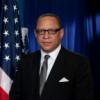
Darryl MaddenDarryl Madden
Director, READY Campaign, FEMA

Mr. Madden is the Director of the READY Campaign for FEMA and has done an outstanding job promoting preparedness for all communities. He graduated from the University of Baltimore. He will discuss how important planning is for contractors working with the Federal government. Follow him on Twitter! @ReadyDirect

 

 350Linda Mathes
CEO, American Red Cross in the National Capital Region

Linda Mathes, selected as a 2008 Washingtonian of the Year, is the Chief Executive Officer of the American Red Cross in the National Capital Region which includes the District of Columbia; counties of Arlington, Fairfax, Loudoun, Montgomery, Prince George’s and Prince William; and cities of Alexandria, Fairfax, Falls Church, Manassas and Manassas Park. Linda was recently invited to the White House to help recognize Red Cross Champions of Change.
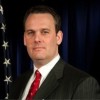
 

Jason-McNamara-300x244Jason McNamara
Vice President, Obsidian Analysis LLC Former Chief of Staff, Administrator Craig Fugate, FEMA

As Vice President, Jason McNamara is a member of Obsidian’s executive management team, directing the disaster recovery program area as well as services for state and local clients. Mr. McNamara is a national leader in homeland security and emergency management, having been Chief of Staff for the Federal Emergency Management Agency (FEMA) for the past four years. In that role, Mr. McNamara worked with leadership at FEMA, the Department of Homeland Security, and the White House to transform FEMA into a highly effective response and recovery agency. As FEMA Administrator Craig Fugate’s Chief of Staff, Mr. McNamara oversaw the cutting of red-tape, the staffing of FEMA with outstanding managers who are widely recognized as the most experienced and talented in the agency’s history, as well as the reinvigoration of the nation’s response and recovery strategies for disasters. Mr. McNamara also helped change FEMA’s orientation towards an emphasis on survivor outcomes and incorporation of the Whole Community in delivering solutions. In addition, he played a key role in legislative accomplishments such as the Sandy Recovery Improvement Act, legislation providing tribal governments the ability to directly request disaster assistance from the President, and the five-year reauthorization of the national flood insurance program.

Joseph TrindalJoseph Trindal
President, Direct Action Resilience & President, InfraGard National Capital Region Members Alliance

Mr. Joseph Trindal is President at Direct Action Resilience LLC (DAR) with offices in Virginia. DAR and its training division, Direct Action Resilience Institute (DARI) is a recognized leader in emergency preparedness, response and resilience for both public and private sectors. Mr. Trindal also serves as President of the InfraGard National Capital Region Members Alliance, an FBI led public/private sector information sharing consortium of over 10,000 members. He also serves on the Homeland Security Intelligence Council. A member of the International Association of Emergency Managers (IAEM), Mr. Trindal serves on the Federal Facilities Emergency Managers Committee. He is also a long standing member of the National Tactical Officer’s Association (NTOA), International Association of Law Enforcement Firearms Instructors (IALEFI), and the International Association of the Chiefs of Police (IACP) among other organizations. Mr. Trindal continues public service as a special Deputy Sheriff for Culpeper County, Virginia.

Dr. Michael WalterDr. Michael Walter
Detection Branch Chief & Program Manager BioWatch, Office of Health Affairs, DHS

As program manager for the BioWatch system, Dr. Michael Walter supports the Department’s efforts to protect the nation from, and prepare federal, state and local governments to respond to biological attacks. Working with lab, field, public health, law enforcement, and emergency management personnel, Dr. Walter assists federal, state, and local governments from across the country in developing and testing response measures to biological attacks, tailored to specific local mission needs. Initiated in the wake of the anthrax attacks 10 years ago, BioWatch is a federally-managed, locally-operated nationwide biosurveillance system designed to detect the release of aerosolized pathogens. BioWatch supports special events including the Super Bowl, presidential inaugurations and national party conventions.

Thank you to the Co-Chairs of GTSC’s National Preparedness Month!

Lilly HarrisLilly Harris

CEO

Man-Machine Systems Assessment

 

Martin RathmannMarty Rathmann

Director of Client Relations

GAP Solutions, Inc.

 

Register now

Thank you to our National Preparedness Month Sponsor!

MSA logo

If you are interested in sponsoring this program, please contact us!

About InfraGard
The InfraGard National Capital Region Members Alliance (INCRMA) consists of a growing membership of professionals who are creating a more resilient critical infrastructure in the Washington, DC metro area. These include defense industrial base, information technology, water supply systems, electrical energy, emergency services, law enforcement, health systems, transportation, banking, and telecommunications. Our membership is voluntary yet exclusive and is comprised of individuals from both the public and private sector. The main goal of INCRMA is to promote ongoing communication, education, and community outreach between the public and private sectors and the FBI. In doing so, information is shared, relationships are strengthened, and vital assets are protected. To learn more, visit InfraGard at www.infragard.org.

Sept. 30: Insight Session with Deputy Administrator Richard Serino, FEMA

The Government Technology & Services Coalition (GTSC) invites you to attend an Insight Session with the Federal Emergency Management Agency’s (FEMA) Deputy Administrator Richard Serino on Monday, September 30 and recognize National Preparedness Month
Richard SerinoAbout Richard Serino
Deputy Administrator, Federal Emergency Management Agency

Richard Serino was appointed by President Obama and confirmed by the Senate as the Federal Emergency Management Agency’s Deputy Administrator in October 2009. In this role, he works directly with Administrator Craig Fugate to promote the “whole community” approach to emergency management, which seeks to build, sustain, and improve the Department’s capacity to prepare for, protect against, respond to, recover from, and mitigate all hazards. Since joining FEMA, Mr. Serino has traveled all over the country to communities affected by disasters to hear directly from survivors, and build relationships with whole community partners. During his tenure, he has seen flooding throughout the Midwest, fires in Colorado and Texas, tornadoes that devastated Joplin, Missouri, tsunami destruction in the American Samoa, and the Hurricane stricken areas in the south and along the east coast.  Additionally, he spends time traveling to each of FEMA’s ten regional offices.

Mr. Serino strives to improve FEMA programs and emergency management by hearing directly from disaster survivors, communities, and FEMA employees. These improvements are focused on emphasizing financial accountability, improving the use of analytics to drive decisions, advancing the workforce, and fostering a culture of innovation. Under Mr. Serino’s leadership, FEMA has championed initiatives such as FEMA Corps, FEMA Stat, the FEMA Think Tank, a detailed budgetary process, and a Disaster Workforce Transformation.

Mr. Serino brings 35 years of state and local emergency management and emergency medical services experience to his position at FEMA. Prior to his appointment as Deputy Administrator, he served as Chief of Boston EMS and Assistant Director of the Boston Public Health Commission. In that role, he bolstered the city’s response plans for major emergencies, including chemical, biological, and radiological attacks. He also led citywide planning for H1N1 influenza. Mr. Serino has served as an Incident Commander for over 35 mass casualty incidents and for all of Boston’s major planned events, including the Boston Marathon, Boston’s Fourth of July celebration, First Night, and the 2004 Democratic National Convention, a National Special Security Event.

Since 1998, Serino has been a National Faculty member for the Domestic Preparedness Program. He was an original contributing member for the Defense Department’s Domestic Preparedness Training Program and Metropolitan Medical Response System. Serino has been involved, since its inception, with the Lessons Learned Information Sharing www.llis.gov  network for emergency responders. As a consultant to the Pentagon and the Defense Department, Serino served on the 9/11 after-action team to assess medical consequence management policies and procedures.  Serino attended Harvard University’s Kennedy School of Government Senior Executives in State and Local Government program in 2000, completed the Kennedy School’s National Preparedness Leadership Initiative in 2005, and  graduated from the Executive Leadership Program, Center for Homeland Defense and Security at the Naval Postgraduate School.

Register now